
Montréal en Lumière is back to light up the Quartier des spectacles and, once again this year, we are proud to present two Montréal works.
Baron Lanteigne – Maintaining Matter (2025)
Baron Lanteigne is a Québec artist working with new media. His approach combines light and sound, building bridges between real and virtual worlds through technological advances. He draws on electronics, sculpture, video, and sound to construct coherent environments—often inspired by still life and inanimate objects—which he recontextualizes through framing, lighting, and spatial composition.
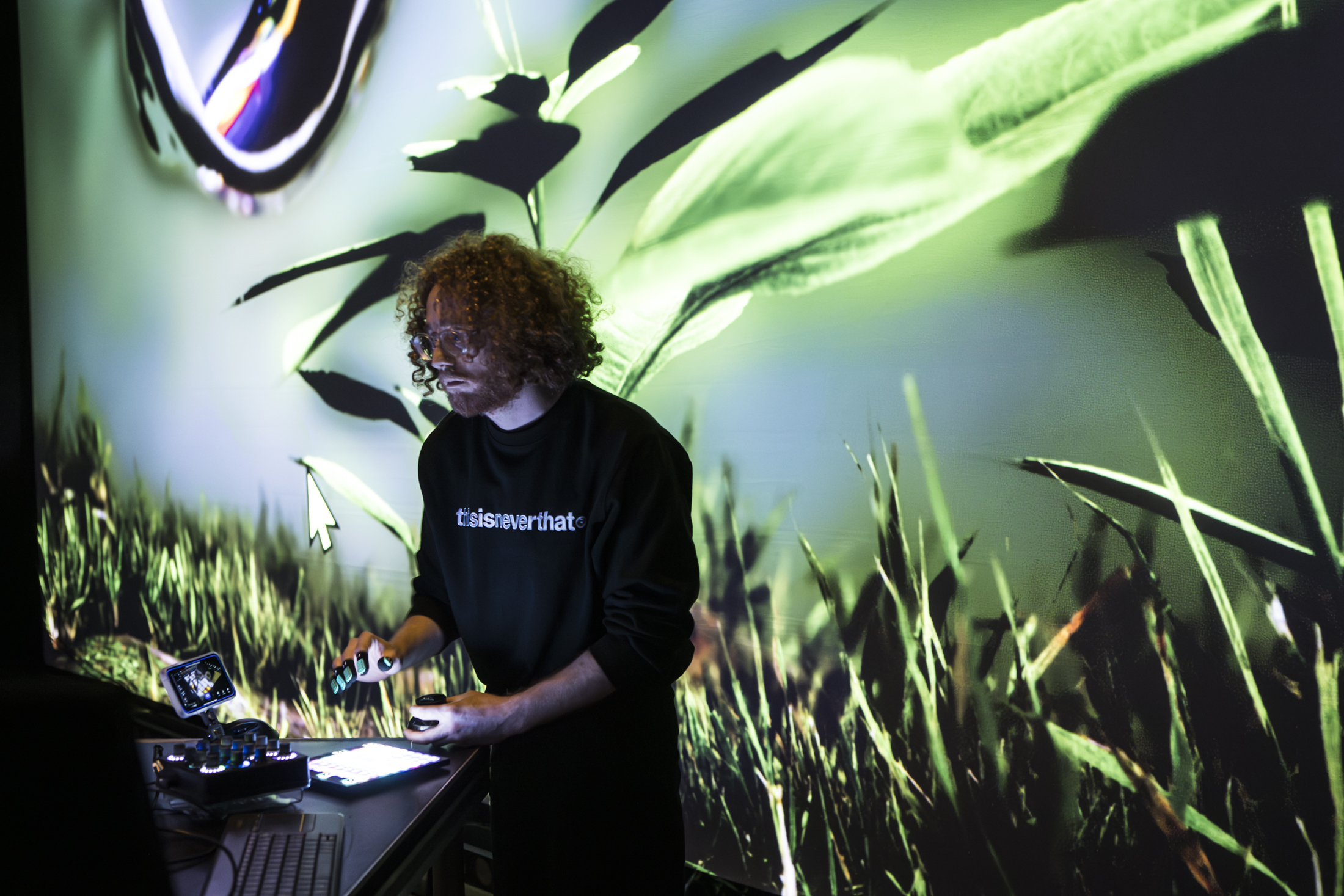
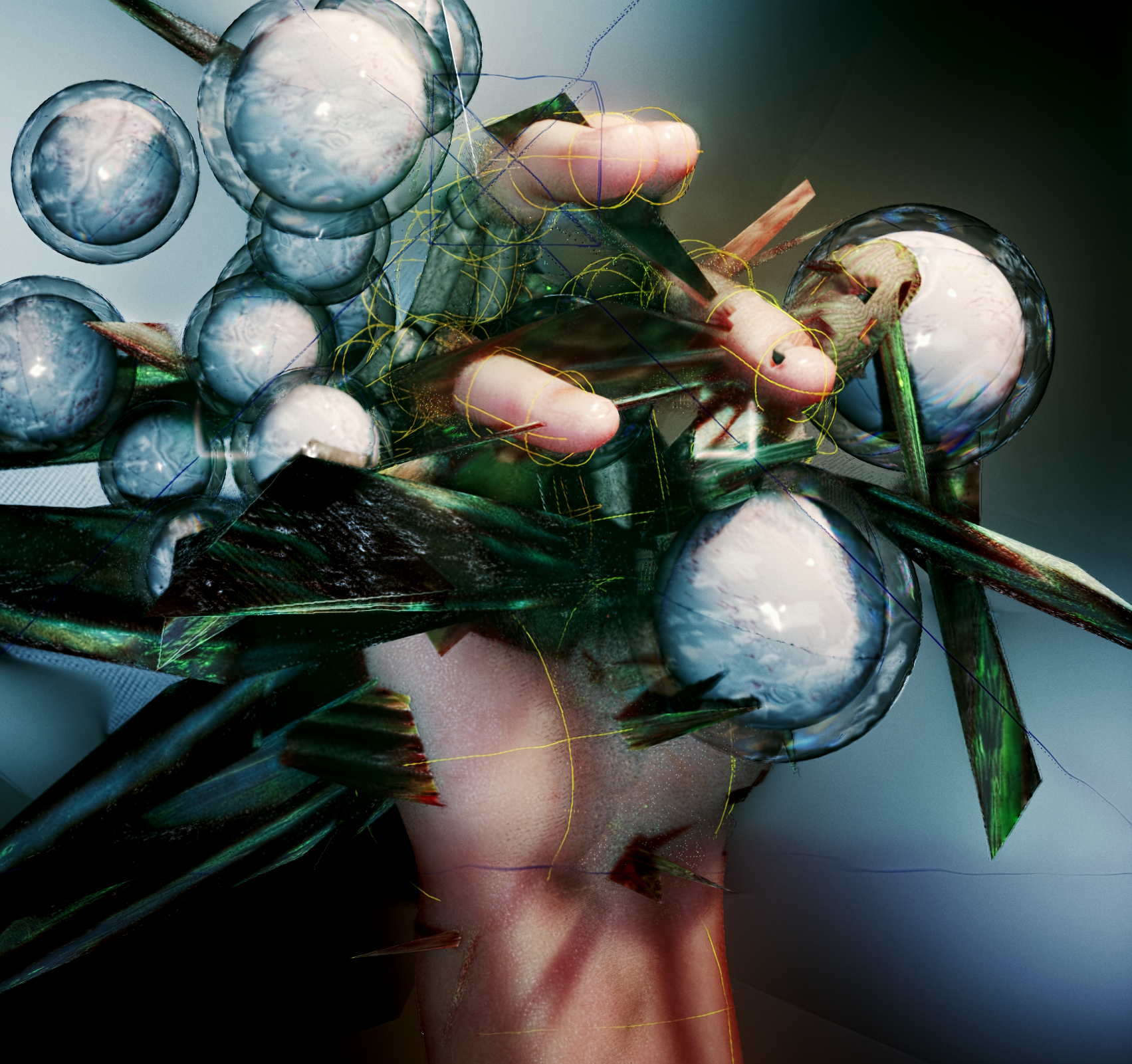
Presented as part of Montréal en Lumière, Maintaining Matter explores the ambiguous relationship between the body and technology, and how technology shapes our gestures, postures, and forms. Generated in real time from a virtual world that simulates the physics of objects through motion capture, the work establishes a direct dialogue between bodily intention and digital matter. Each interaction leaves a trace, documenting an evolving system and capturing a specific moment of tension between the organic and the technological.
Marie-Ève Levasseur – Ecosystems of Radical Alterity (Generative Relations) (2024–2025)
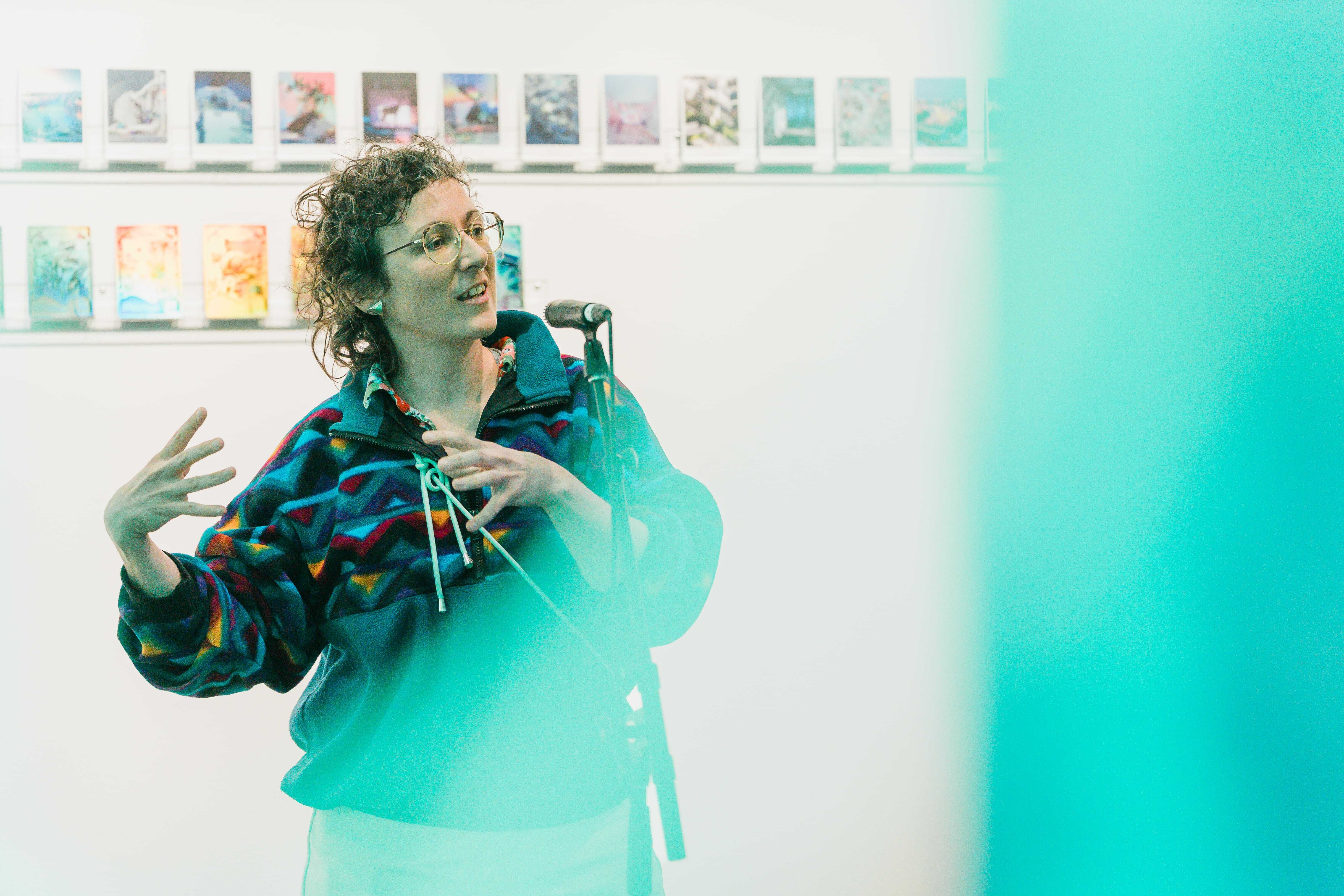
Marie-Ève Levasseur is an interdisciplinary artist based in Tiohtià:ke/Montréal. Her practice spans video, installation, sculpture, digital printing, 3D animation, as well as virtual and augmented reality. Drawing on feminist posthumanism, she examines metamorphosis, hybridity, and collaboration with the non-human, while also considering the place of the material and emotional body in our screen-mediated communications.
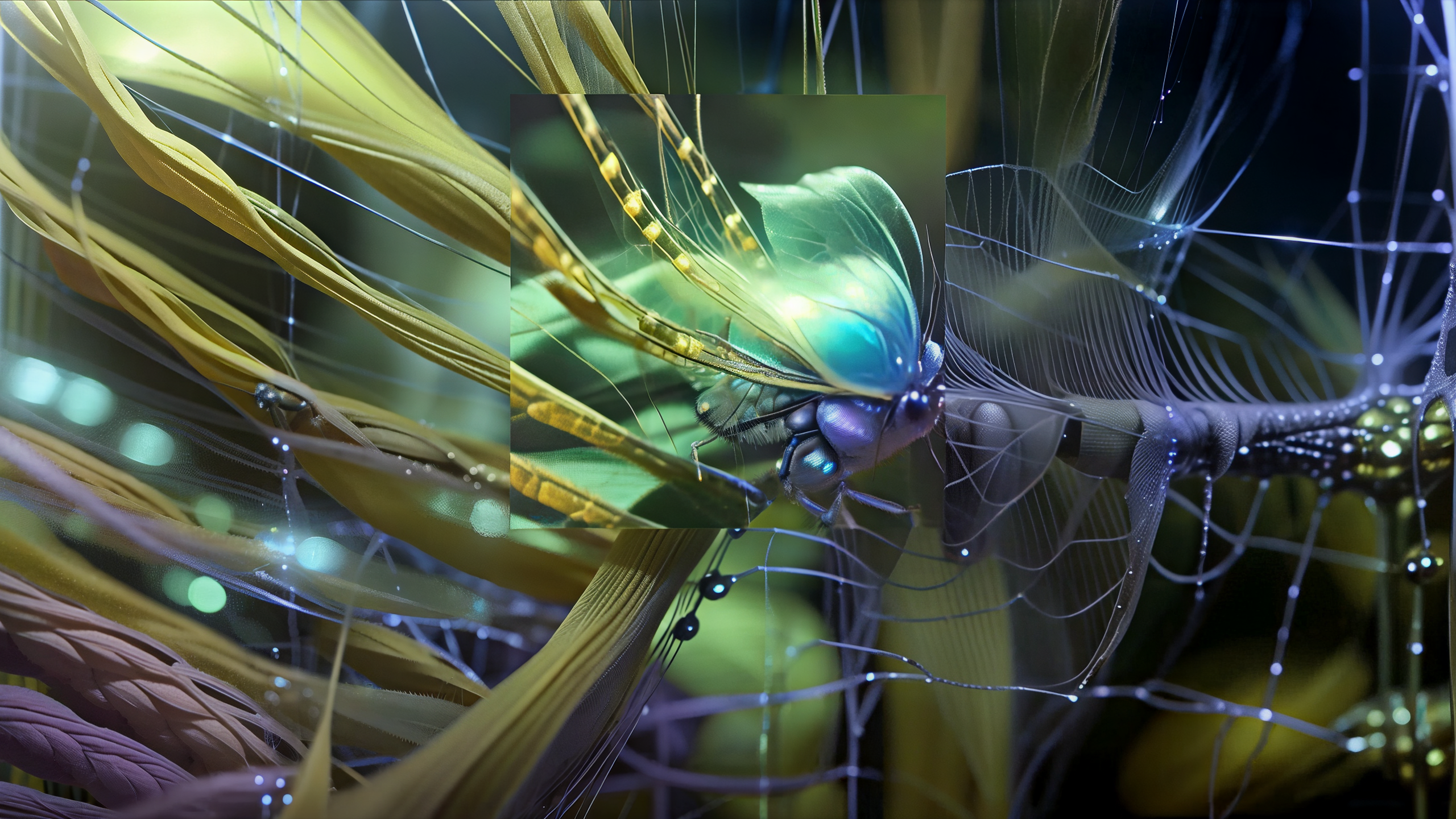
Created as part of Sporobole’s AI Workshop, Ecosystems of Radical Alterity (Generative Relations) is a generative video structured by the rules of a hypothetical virtual ecosystem. The work imagines hybrid species blending technologies and arthropods, and explores the symbiotic relationships—parasitism, mutualism, commensalism—that they might generate. Drawing on machine-learning tools, it invites us to reconsider our role within these systems of interdependence and the value we assign to our interactions.
Both works can be seen from February 27 to March 7 on the façade of the Wilder – UQAM building, starting at 6 p.m.

From Friday, May 8, 2026
10:00 pm_12:45 am


