
Some photos resonate thanks to composition, others through raw emotion, and some leave a mark through the stories you don’t see.
For MUTEK photographer Vivien Gaumand, the magic lies in letting go of expectations so the moment can take hold. Below, he reflects on this ethos, as well as an especially memorable moment from a past edition, before he returns to capture another year.
Q&A With Vivien Gaumand
How would you describe your photographic style? What influences or approaches shape your work?
I started with street photography, using a candid approach and accepting imperfections in favour of visual narratives. Over time, documenting festivals, live performances, and film sets allowed me to further develop this interest in visual storytelling.
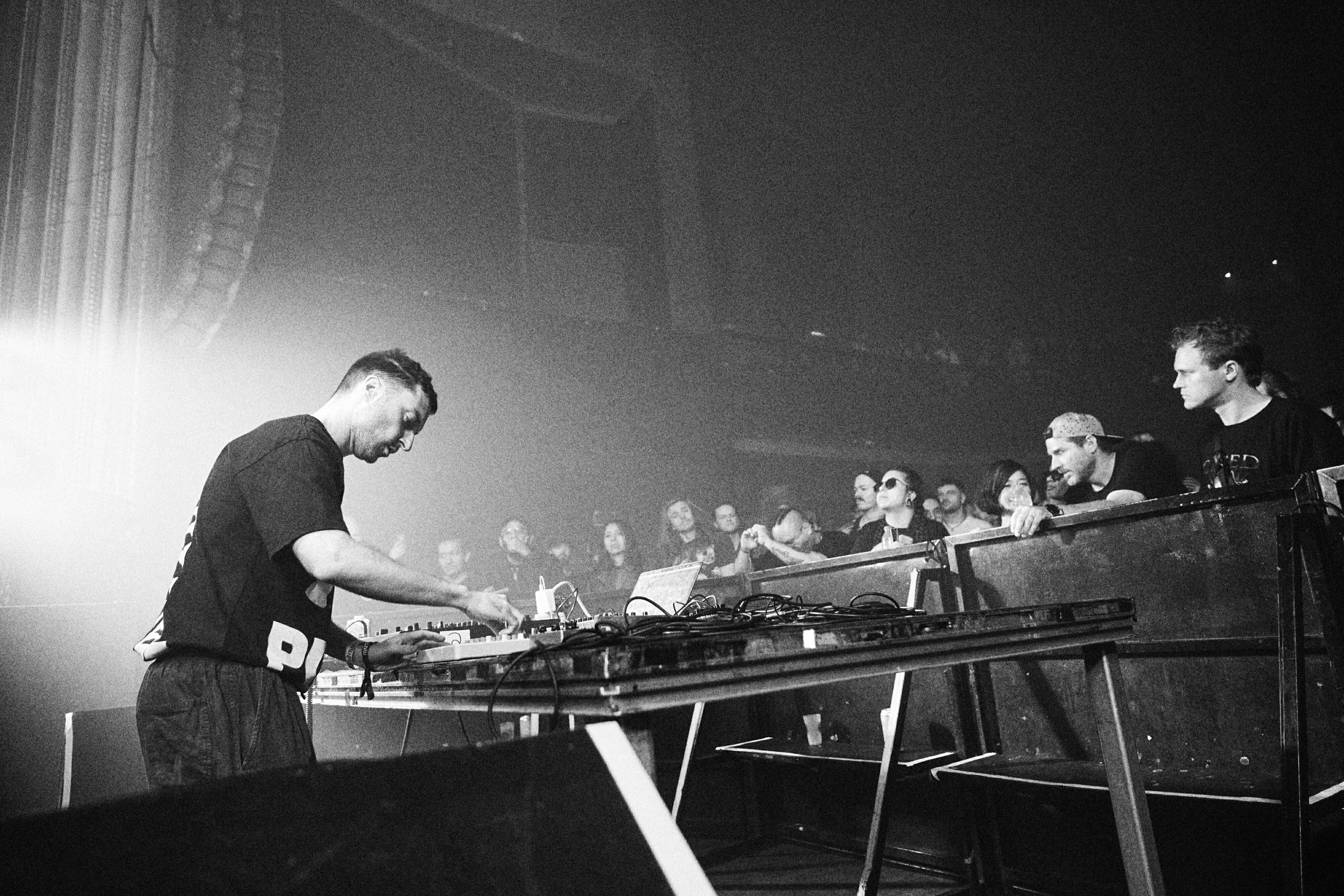
How do you balance artistic approach with documentary perspective when photographing MUTEK?
For me, an artistic approach and a documentary perspective aren't at odds with one another. We document the festival to capture the event in all its facets and to share the experience of being there, both as a lasting record and as a communication tool for the festival.
MUTEK's very nature encourages artistic exploration. Its audiovisual performances, stage design, and the dialogue between sound and image create an ideal playground for photographic experimentation.
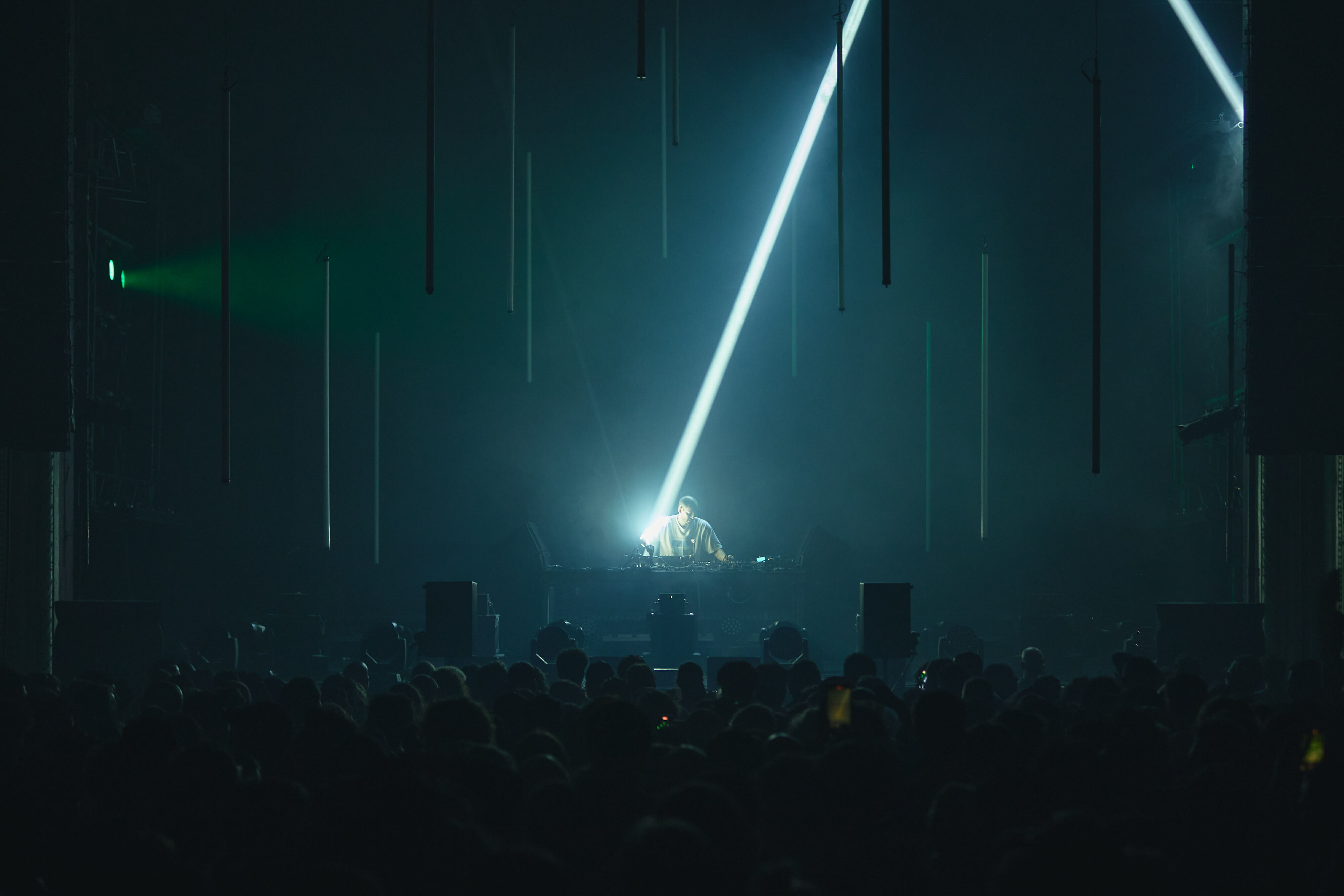
What kinds of moments draw you in the most? Is it composition, emotion, timing, or something else that inspires you to capture a scene?
I think it's a balance between all of those elements, and that balance shifts depending on the situation. Sometimes one naturally takes precedence over the others.
I used to spend a lot of time anticipating and pre-visualize scenes. Now I have a much more relaxed mindset, which still leads to carefully considered compositions but also helps me see value in photos I might have dismissed. Some images stand out not because they're technically perfect, but because of the emotion they convey.
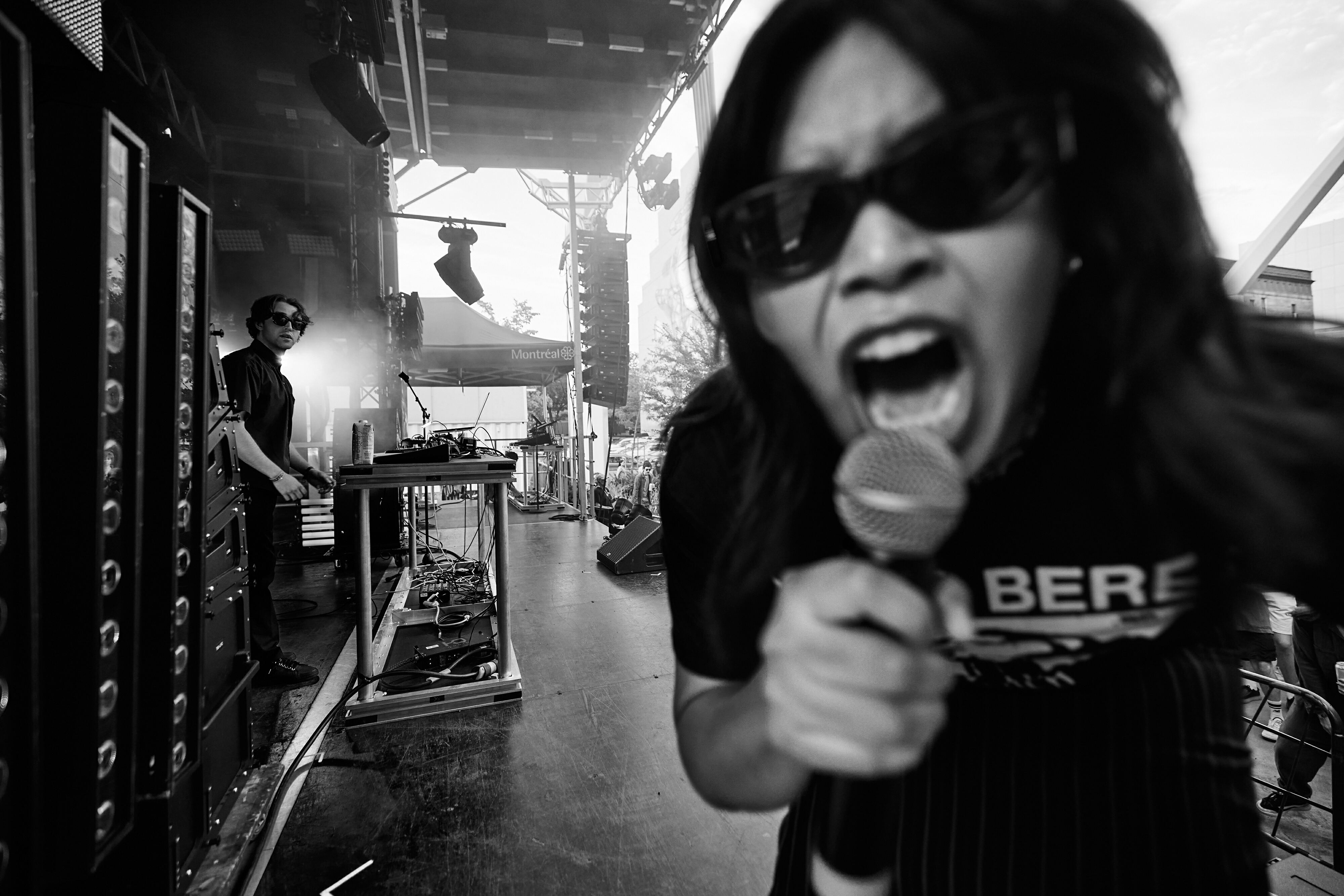
Can you share the story behind these photos? What was happening when you decided to take them?
Rather than talking about a specific photo, I'd rather share a story about one of the performances I had the chance to document.
It was Evian Christ's 2024 performance, featuring scenography by Emmanuel Biard at the Metropolis event. I had absolutely no idea what to expect.
The stage setup consisted of Evian Christ standing in front of three large mirrored lens panels, onto which three light sources were projected and reflected throughout the entire venue. To enhance the effect and carve out the DJ's silhouette, the room was filled with smoke. At the front of the stage, there were also around twenty strobe lights intensifying the hazy atmosphere and silhouetting the performer.
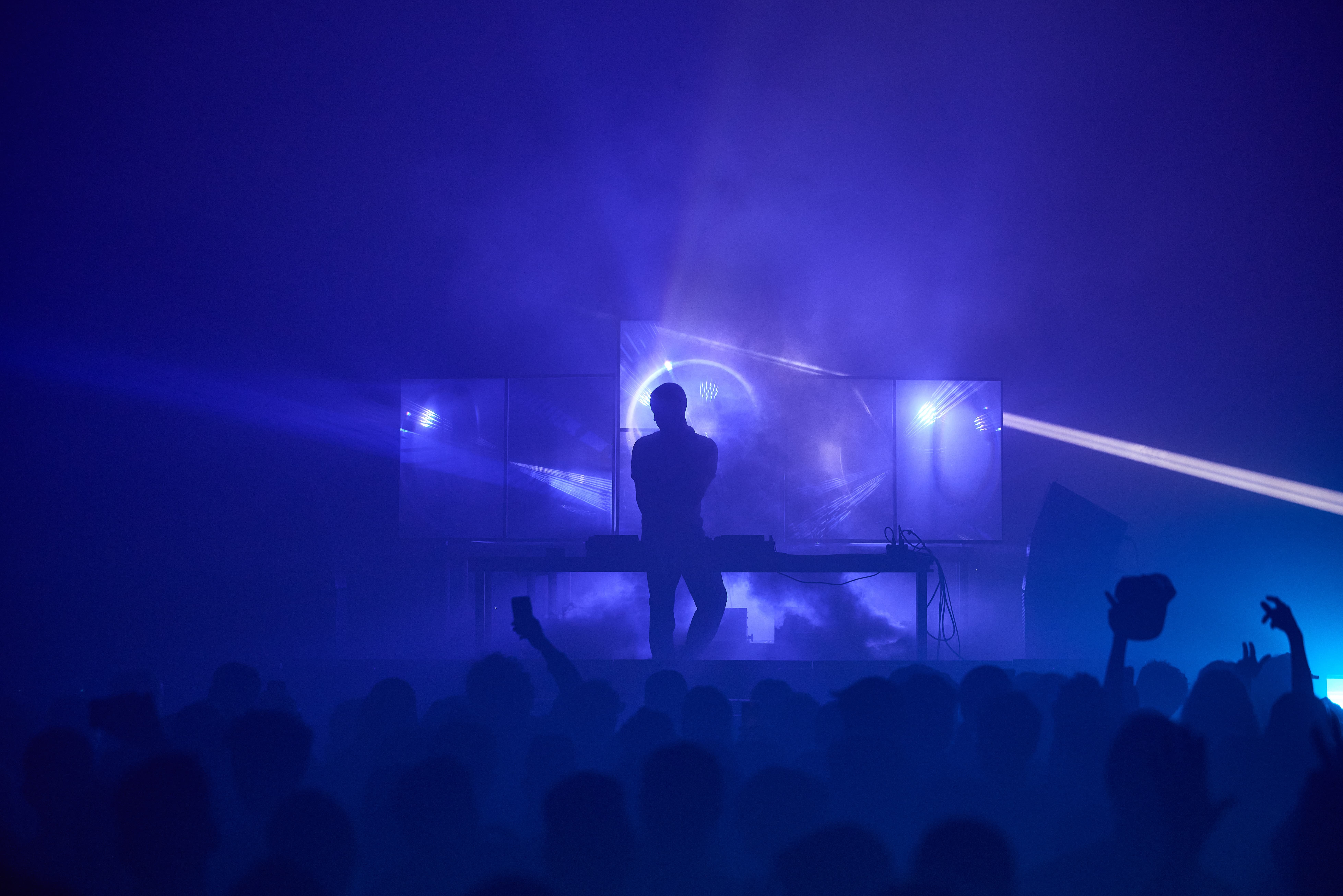
When you're working in an environment saturated with smoke and strobes, a camera's autofocus can quickly struggle. Shooting in burst mode is often the best way to compensate. On some cameras, the image sensor is read line by line to create the final image, and the flashes from the strobes can interfere with that process, producing visual artifacts. Shooting continuously helps work around those limitations.
So I was focused through my viewfinder, holding down the shutter for several seconds with the strobes flashing directly in my face, hoping to capture a successful frame. After a while, my vision started to deteriorate... and then everything went black. I found myself standing in the photographers' pit facing the stage, completely unable to see for about ten seconds.
It was ultimately thanks to the venue’s security guard, who helped me get out of the pit, that I was able to regain my composure… and my photos.
In the end, it's one of my favorite photographs I've taken since I started covering MUTEK.
MUTEK Argentina: Myriam Bleau, Dana Ruh, NVST, and Satoshi Tomiie Land in Buenos Aires

Florence-Delphine Roux Takes Her Search For Hidden Sounds Across Montréal

MUTEK 2026 Report: An ecosystem that amplifies digital creativity in Montréal and around the world

MUTEK Montréal Edition 28: Sensitive Waves


